Community
Siblings quarrel over friendship with ex
By Maya Thompson
Advertisement · Why this ad?
Maya holds a Master’s in Journalism from the University of Georgia and has over 15 years of experience in local news. She previously worked for the Savannah Morning News, where she led coverage on community initiatives and grassroots movements. An avid supporter of Brunswick's cultural diversity, Maya is committed to amplifying local voices and stories.
More from Maya →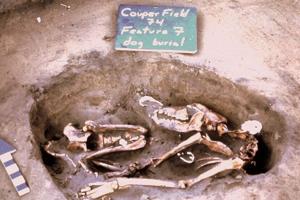
For thousands of years, people have called Cannon’s Point home. Long before the Couper family established its plantation on the northern end of St. Simons Island, Native American communities lived and worked there. Today, the archaeological record they left behind continues to offer new insight into the history of Georgia’s coast. Archaeologist Jerald T. Milanich will shine a spotlight on that history at a lecture this month, part of the Coastal Georgia Historical Society’s 2026 Journeys program. Milanich is a renowned archaeologist and curator emeritus at the Florida Museum of Natural History and will present The 4,000-Year-Old History of Cannon’s Point, drawing on his firsthand experience as one of the archaeologists who helped lead a major investigation of the property during the 1970s. The University of Florida archaeological team spent more than two years excavating at Cannon’s Point between 1973 and 1975. Their work uncovered evidence of thousands of years of Native American occupation, along with important information about the people who lived and worked on the property during its plantation era. The project helped lay the groundwork for what is now known as plantation archaeology. Now a full-fledged field, it examines the lives and experiences of enslaved people through the material remains of plantation sites. The initial investigation came about through a connection between Charles H. Fairbanks, a University of Florida archaeologist who had previously worked at Fort Frederica, and Alfred W. Jones Sr. of the Sea Island Co. When Jones approached Fairbanks about studying Cannon’s Point, then owned by Sea Island Co., the goal was to learn more about the property’s history, including the Couper family and the enslaved people who labored on the plantation. Milanich, who had recently joined the University of Florida’s anthropology department in 1973, was eager to take part. “I jumped at the chance to work on St. Simons,” he said. Fairbanks and Milanich secured grants from the National Science Foundation and the Sea Island Foundation to support the research. At the same time, Sea Island Co. provided logistical assistance. The work wasn’t without its challenges. Milanich recalled that the mosquitoes and ticks at Cannon’s Point were worse than anywhere else he had worked. Still, the experience left a lasting impression and helped shape his career. The archaeological discoveries were significant. Among the most notable was a large shell ring, similar to others found along the Atlantic coast of the southeastern United States. Radiocarbon dating indicates the ring was built and used about 4,000 years ago. Native American communities continued to occupy Cannon’s Point intermittently for thousands of years, with evidence of habitation extending into the late 1600s. Archaeological work at the property also provided a closer look at the 19th-century plantation landscape, expanding what historians know about the Couper family and the enslaved African Americans who lived and worked there. The earliest professional archaeological investigations at Cannon’s Point actually date to the 1930s, when Preston Holder conducted excavations at five locations as part of the federal Works Progress Administration program. Relatively little documentation from Holder’s work survives, making it difficult to determine exactly what he found. His investigations nevertheless established an early record of Native American occupation at the site. Coastal Georgia Historical Society Archaeologist Aaron Ellrich said the discoveries made at Cannon’s Point have helped historians better understand the region’s long and complicated past. “Archaeological investigations at Cannon’s Point have revealed evidence of human occupation extending back to the Early Archaic period, more than 5,000 years ago,” Ellrich said. The property became a protected preserve in 2012, when the St. Simons Land Trust completed its acquisition following an 18-month capital campaign. A 2021 partnership involving the Land Trust, the Georgia Department of Natural Resources and The Nature Conservancy expanded the preserve by approximately 100 acres, including 63 acres of marshland. The Nature Conservancy also holds a perpetual conservation easement covering the property, protecting it from future commercial or residential development. That protection is important not only for preserving the natural landscape but also for safeguarding the archaeological resources beneath it. Ellrich said only portions of Cannon’s Point have been intensively investigated, leaving plenty of opportunities for additional discoveries. New technologies, particularly remote sensing techniques, also allow archaeologists to examine the landscape in ways that weren’t possible during the original excavations. Existing collections from the site also remain understudied, offering opportunities to revisit earlier interpretations and ask new questions. Milanich compared the collections to books in a library, preserved for future researchers who can apply new techniques and approaches to learn more about the past. That opportunity has become even more meaningful with the recent return of the Cannon’s Point archaeological collections to the Coastal Georgia Historical Society. The return fulfills a longstanding wish of the Jones family, who wanted the materials to eventually come back to St. Simons Island. Milanich said he is grateful to the many people and organizations involved in making that happen, particularly the historical society. He also plans to share newer research made possible by renewed interest in the collections, including findings related to Spanish activity at Cannon’s Point in the early 1500s and evidence of what was almost certainly a Franciscan mission on the property in the late 1600s. For Milanich, having the opportunity to revisit a project that began more than half a century ago is something of a rarity. He credited Ellrich and the historical society’s archaeology team with reinvigorating interest in the original work and helping open the door to new research. As Milanich’s upcoming lecture will demonstrate, some of the most interesting chapters of Cannon’s Point’s history may still be waiting to be uncovered. The Coastal Georgia Historical Society makes thousands of primary source materials available to students and educators through its collections, while its Archaeology Blog offers a look at the work taking place in its Archaeology Lab. The St. Simons Land Trust offers group tours of Cannon’s Point Preserve and provides educational lesson plans developed by teams at the College of Coastal Georgia. The resources allow students and teachers to explore the preserve’s history beyond the classroom. Educational resources are available at coastalgeorgiahistory.org/archaeology-blog/ for updates from the Archaeology Lab and coastalgeorgiahistory.org/learn/for-teachers/collections-in-the-classroom/ for classroom resources. For information about Cannon’s Point Preserve tours and lesson plans, visit sslt.org/protected-properties-2/cannons-point-preserve/schedule-a-field-trip/ . The lecture is scheduled for 6 p.m. on Nov. 17 at St. Simons Presbyterian Church, 205 Kings Way on St. Simons Island. For more information or to make a reservation, visit coastalgeorgiahistory.org .